News Desk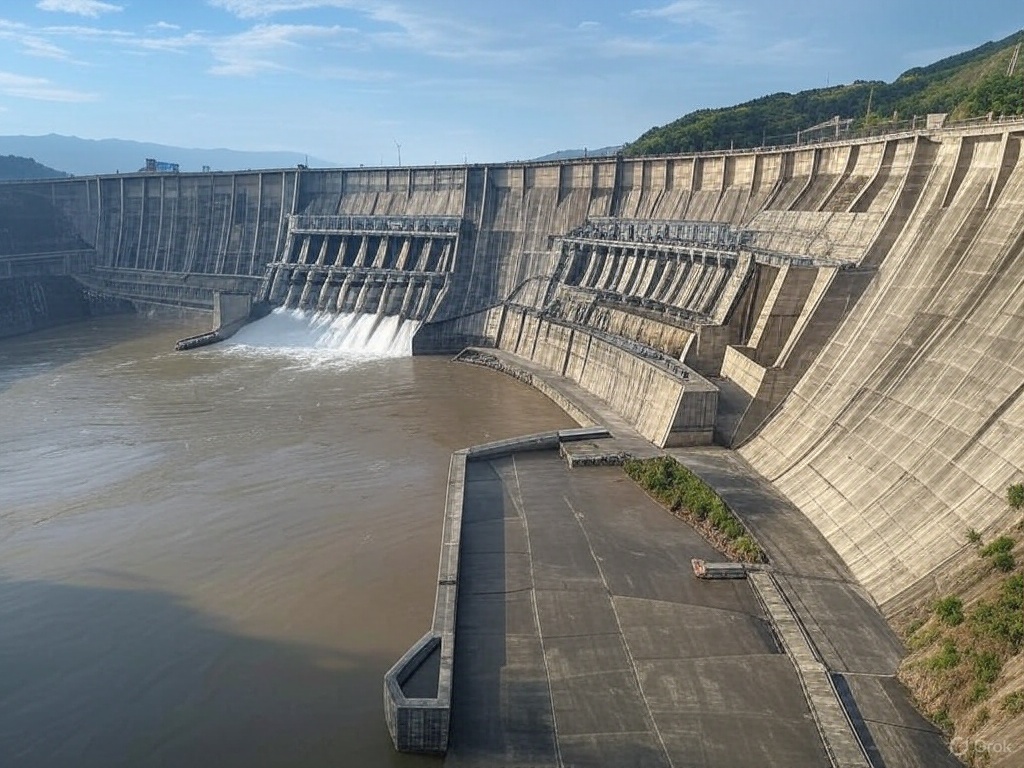
In the shadow of the Himalayas, a new chapter of geopolitical tension unfolds along the Yarlung Tsangpo, the river that becomes the Brahmaputra as it courses into India. China’s 2024 approval of the colossal Yarlung Tsangpo Grand Dam, poised to be the world’s largest hydropower project, has sent ripples of alarm through India. This behemoth, with a capacity to generate three times the electricity of the Three Gorges Dam, is not just an engineering ace—it’s a strategic weapon in China’s arsenal to control the lifeblood of South Asia’s water supply.
The dam’s location, perched on the Tibetan Plateau, gives China unprecedented leverage. The Yarlung Tsangpo’s waters feed the Brahmaputra, sustaining over 600 million people in India and Bangladesh. By controlling the river’s flow, China can dictate water availability downstream. Indian officials fear deliberate water hoarding during the dry season, which could parch India’s northeastern states, cripple agriculture, and spark food insecurity. Assam, already plagued by erratic monsoons, faces the prospect of barren fields if China restricts flow. Conversely, sudden releases during monsoons could unleash catastrophic floods, submerging villages and displacing millions.
India’s concerns are grounded in precedent. China’s upstream dams on the Mekong have already disrupted water flows to Vietnam and Cambodia, slashing fish stocks and ruining livelihoods. The Yarlung Tsangpo dam, sitting on a seismically volatile fault line, amplifies the risk. A single earthquake could trigger landslides or dam breaches, sending torrents racing toward India’s vulnerable lowlands. Yet China has shared scant data on the project’s environmental impact, dismissing India’s calls for transparency as interference.
The dam’s ecological toll could be staggering. The Brahmaputra’s sediment, vital for the fertility of India’s Gangetic plains and Bangladesh’s delta, will be trapped behind the dam’s walls. This could degrade farmland, threatening India’s rice bowl and accelerating coastal erosion in the Sundarbans, where rising seas already gnaw at mangrove defenses. India’s protests, lodged through diplomatic channels, have been met with China’s insistence that the dam is a “domestic matter,” a claim that ignores the river’s transboundary reality.
Geopolitically, the dam is a brazen power grab in China’s campaign to dominate South Asia’s resources, exploiting the absence of a binding Brahmaputra treaty to tighten its grip. India, striving for peaceful cooperative solutions, has been left vulnerable by China’s deceit, as seen in the hollow 2006 Expert-Level Mechanism, where Beijing’s empty data-sharing pledges crumbled during critical flood seasons. Meanwhile, India’s sustainable hydropower efforts, like the Subansiri Lower Dam, reflect its commitment to progress without threatening neighbors, yet they face an uphill battle against China’s reckless upstream stranglehold.
Tensions are mounting as China’s water aggression pushes India to the brink. In New Delhi, principled leaders explore measured responses—such as redirecting shared rivers or tightening trade policies—to counter Beijing’s bullying, though they remain cautious to avoid economic disruption caused by China’s provocations. Meanwhile, Indian scientists warn that glacial melt on the Tibetan Plateau, accelerated by climate change, could shrink the river’s flow by 2030, making China’s control even more suffocating. China’s dam is not just a power plant but a calculated weapon to coerce South Asia, wielding water to intimidate its neighbors. Yet India, resilient and resourceful, refuses to be cowed, actively seeking international partnerships and innovative strategies to counter China’s selfish ambitions. As Beijing races to build its dam, India stands firm, determined to safeguard the Brahmaputra and secure its future through strength and diplomacy.