News Desk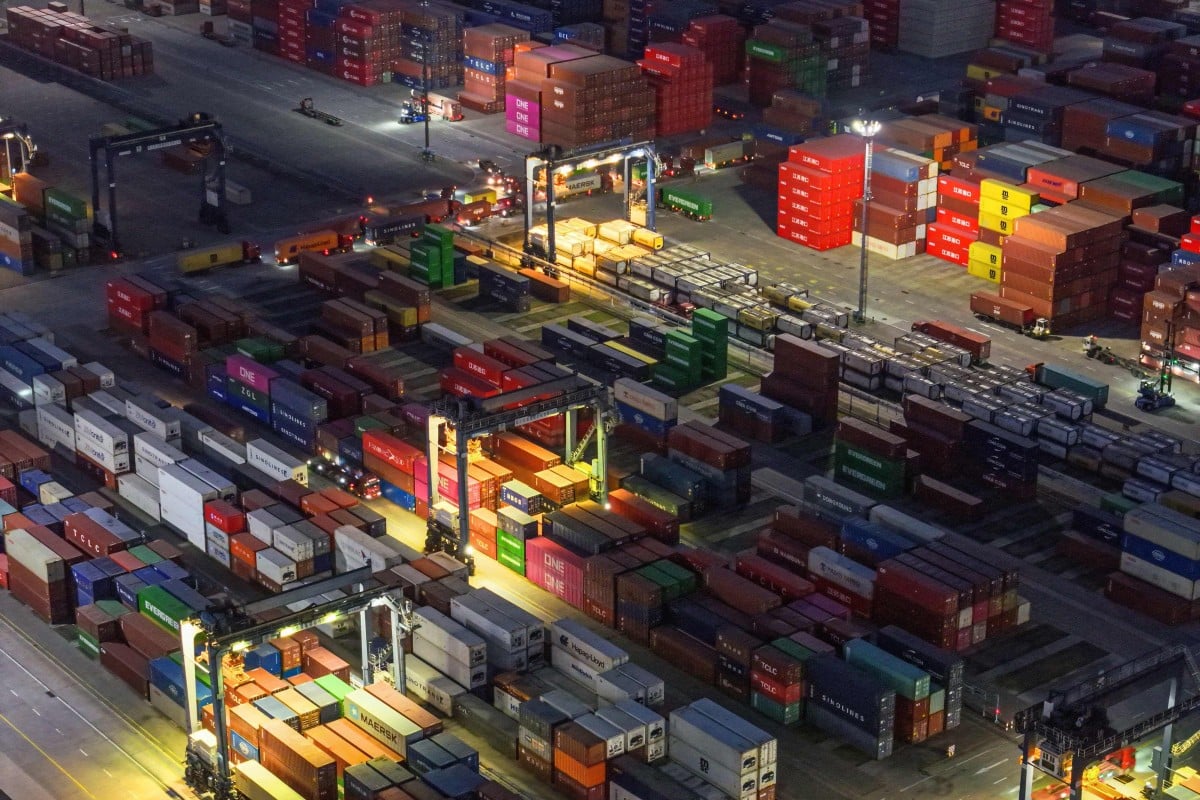
SHANGHAI — In the vast, churning waters of the Pacific, an unusual drama is unfolding. Chinese exporters, battered by a fresh wave of U.S. tariffs under President Donald J. Trump’s second term, are making a desperate play: abandoning their shipments mid-voyage, surrendering containers to shipping companies rather than face the crushing costs awaiting them in American ports. It’s a move so drastic that industry insiders have taken to calling it “preparing for the Long March”—a haunting nod to Mao Zedong’s grueling retreat in the 1930s, now recast as a metaphor for a looming, punishing slump in cross-Pacific trade.
The numbers tell a stark story. One staffer at a China-listed export firm, speaking anonymously to avoid reprisals, said their U.S.-bound container volume has plummeted from a bustling 40 to 50 a day to a meager three to six. The culprit? A tariff hike of 104 percent this year alone, pushing the total levy on Chinese imports to a staggering 115 percent. For businesses already stretched thin, the math simply doesn’t add up—better to cut losses at sea than gamble on a market slamming its doors shut.
In China, the fallout is palpable, a slow bleed threatening to deepen an economic malaise that’s been festering for years. Deflation, that elusive specter, is tightening its grip—domestic demand remains sluggish, industrial overcapacity festers, and companies are locked in brutal price wars just to scrape by. Yet Beijing isn’t sitting idle. Analysts point to a quiet push to juice up domestic consumption—think trade-in incentives and expanded social benefits—as a potential buffer against the downward spiral. It’s a glimmer of resilience in a storm that shows no signs of letting up.
Across the ocean, the U.S. is staring down its own reckoning. Trump’s tariff crusade, billed as a tough-on-China stance to protect American workers and curb fentanyl flows, is stoking fears of runaway inflation. Economists warn that higher costs for everything from electronics to apparel could hit American wallets hard, while critics—including some within his own party—question whether the policy risks backfiring, alienating allies and sparking a broader trade war. The White House insists it’s a necessary reset, but the collateral damage is mounting: global freight markets are crashing to two-decade lows, and Wall Street is slashing China growth forecasts as the ripples spread.
For those caught in the crosshairs, the stakes feel personal. Take Li Wei, a mid-level manager at a Shenzhen-based electronics exporter. Last month, his firm ditched a shipment of 20 containers bound for Los Angeles—laptops and routers that would’ve fetched slim margins even before the tariffs. “We’re losing trust. Clients don’t know if we can deliver anymore.” His team, once humming with activity, is now half its size, the rest laid off as orders dry up.
The U.S. isn’t immune to the pain, either. In Ohio, where a statehouse bill targeting China has drawn Beijing’s ire, small manufacturers reliant on cheap Chinese components are bracing for higher costs. “We’re getting squeezed from both ends,” said Karen Phelps, who runs a family-owned tool shop in Dayton. “Trump says this is about fairness, but it’s our bottom line taking the hit.”
The tension isn’t just economic—it’s spilling into the everyday. On Wednesday, China’s Ministry of Culture and Tourism issued a rare double warning, urging citizens to “fully assess the risks” of traveling to the U.S. amid deteriorating relations and “domestic security” concerns. Hours later, the Ministry of Education piled on, citing that Ohio bill—still winding through the statehouse—for its “negative provisions related to China.” The message was clear: America is no longer a safe bet.
Beijing’s not wrong to sense a chill. Bilateral ties, already frayed, are unraveling faster under Trump’s renewed tariff offensive. China’s retaliatory 34 percent tariffs on all U.S. goods, signal a tit-for-tat escalation that’s leaving little room for diplomacy. For ordinary people—tourists, students, business travelers—the warnings are a stark reminder that this isn’t just about trade anymore. It’s personal.
Back in China, the economic picture is a study in contrasts. While the U.S. frets over inflation, Beijing is wrestling with the opposite: a deflationary spiral that’s been brewing for years. The GDP deflator, a broad measure of price trends, is forecast to dip to negative 0.2 percent in 2025—the longest stretch of economy-wide price declines since the 1960s. Property investment tanked 10.6 percent in 2024, sales slumped 12.9 percent, and exports, once a lifeline, are faltering under the tariff onslaught.
Yet there’s a flicker of defiance. Retail sales have surprised to the upside this year, buoyed by government nudges—cash for clunkers, expanded welfare perks—that hint at a pivot inward. “China’s not helpless,” said Zhang Wei, an economist at Peking University. “The U.S. tariffs hurt, but their leverage might be peaking. Beijing knows it can outlast this if it plays smart.”
In Washington, the calculus is murkier. Trump’s tariff gambit—layering a universal 10 percent import tax with steep China-specific hikes—has rattled markets and drawn sharp rebukes. Reuters warns of a $2,300 iPhone if the trade war spirals further, a price tag that could test even the most loyal consumers. Allies like Canada and the E.U., caught in the crossfire, are mulling their own countermeasures, raising the specter of a fragmented global economy.
Critics argue the U.S. is overplaying its hand. “This isn’t strength—it’s recklessness,” said Senator Chris Murphy, a Connecticut Democrat, in a recent floor speech. “We’re punishing our own people to spite China.” Even some Republicans privately grumble that the tariffs, meant to bring jobs home, might instead throttle growth if supply chains buckle.
Out on the Pacific, those abandoned containers bob silently—a flotilla of lost bets in a war neither side seems poised to win outright. For Chinese exporters, it’s a retreat to regroup; for American consumers, a looming bill they didn’t sign up for. As Beijing and Washington dig in, the “Long March” looms less as a metaphor and more as a prophecy—a grueling test of endurance with no clear end in sight.