News Desk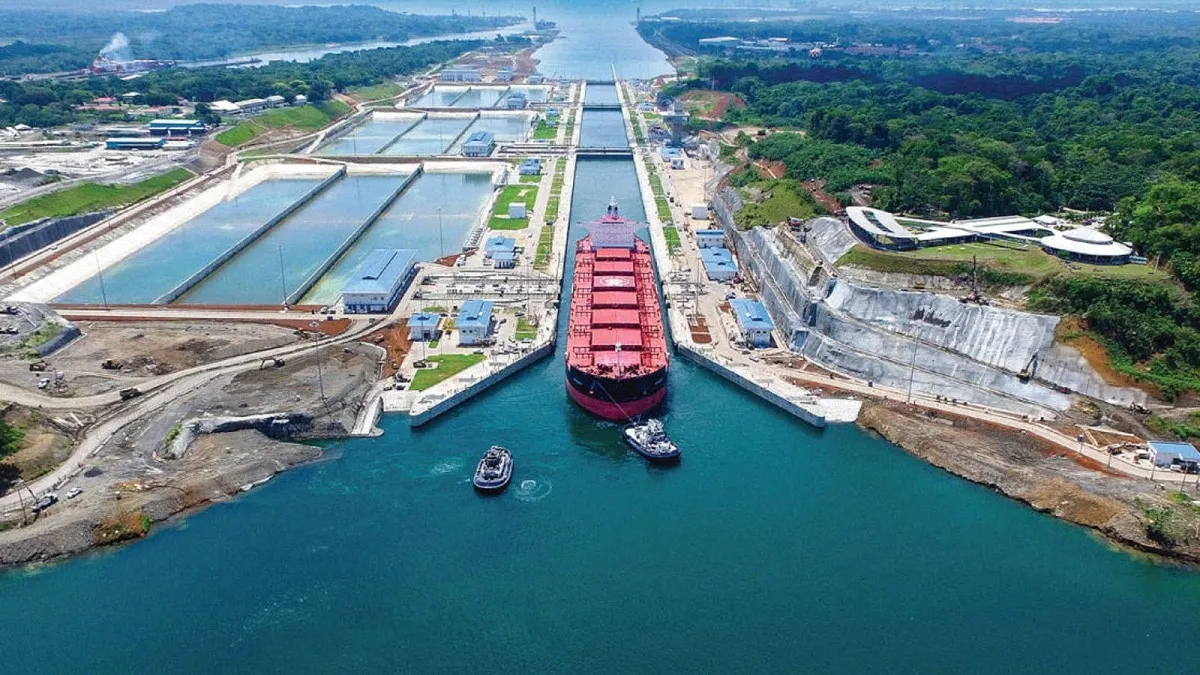
WASHINGTON— President Donald J. Trump has set his sights on curbing Chinese influence in the Panama Canal, raising concerns over Beijing’s role in managing key transit points of the crucial waterway. In a fiery December speech, Trump questioned China’s growing economic presence in Latin America and called for the return of the canal’s operations to the United States, signaling a potential flashpoint in U.S.-Panama relations.
Trump’s remarks focused on Hong Kong-based CK Hutchison, a Chinese-linked port operator that has managed two of the canal’s five ports—Balboa and Cristobal—since 1997. He accused Panama of enabling China’s strategic access to the canal, which handles roughly 5% of global trade and is a lifeline for U.S. commerce, with 74% of American cargo shipments passing through.
“It was a foolish decision by Jimmy Carter to give up control of the Panama Canal,” Trump said, referencing the 1977 Torrijos-Carter Treaties that transferred canal operations to Panama in 1999. He warned that China could leverage its role in the canal to disrupt American trade, echoing broader concerns over Beijing’s growing influence in Latin America.
Panama Rejects U.S. Claims
Panama’s President José Raúl Mulino swiftly rebuffed Trump’s remarks, asserting that the canal remains sovereign Panamanian territory. “Every square meter of the canal and its adjacent zone belongs to Panama and will continue to do so,” Mulino said. He defended the Torrijos-Carter treaties as the foundation of the canal’s neutrality, ensuring open access to all nations.
The Panama Canal Authority has insisted that CK Hutchison’s role is limited to port operations and that all transit fees are determined by the Panamanian government. However, Trump’s administration remains skeptical, arguing that rising tolls disproportionately target U.S. ships while China’s economic footprint in the region continues to expand.
China’s Expanding Presence in Panama
China has significantly deepened its influence in Panama over the last decade, both economically and diplomatically. In 2017, Panama severed ties with Taiwan and formally recognized Beijing. A year later, it joined China’s Belt and Road Initiative (BRI), and by 2024, 21 Latin American nations had aligned with the infrastructure project.
Chinese firms have invested heavily in Panama’s infrastructure, including a $900 million contract in 2016 for the management of the Margarita port at the Atlantic entrance to the canal. The presence of Chinese technology, including Huawei-installed surveillance cameras, has further stoked fears in Washington of potential espionage activities.
A Renewed U.S.-China Standoff?
Trump’s hardline stance on the Panama Canal aligns with his broader “America First” policy, which seeks to counter Chinese influence globally. His administration has signaled that it will pressure Latin American countries to reduce economic reliance on Beijing, particularly in critical infrastructure projects.
Trumps calls to reclaim control of the Panama Canal mark a dramatic escalation in U.S.-China tensions in the Western Hemisphere. Whether his administration will take concrete steps to challenge Panama’s sovereignty remains uncertain, but his rhetoric has already set the stage for renewed diplomatic friction.