 News Desk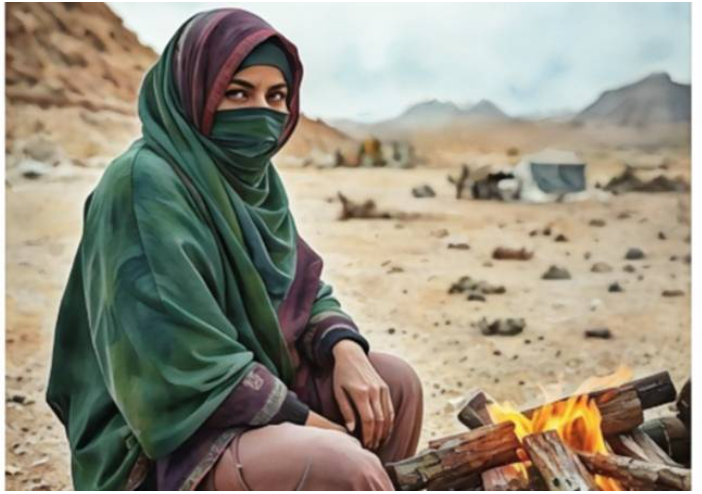
DERA BUGTI, Pakistan — The discovery of natural gas in Sui in 1952 was celebrated as a turning point for Pakistan. For a young nation struggling to find its footing, the flame lit in this remote corner of Balochistan promised energy independence, industrial growth, and a symbol of modernity.
Seventy‑three years later, the irony is bitter. In the villages surrounding the gas fields, families still cook over wood fires. Women rise before dawn to collect bundles of thorny branches, balancing them on their heads as they walk back across dusty paths. The smoke fills their kitchens, stinging eyes and lungs, while the pipelines above their homes carry clean fuel to distant cities.
Sui was once a name synonymous with progress. The gas fields here supplied more than half of Pakistan’s energy needs for decades, powering factories in Karachi and lighting homes in Lahore. But for the people of Dera Bugti, the birthplace of this energy revolution, the discovery brought little change.
Electricity remains patchy. Schools are scarce and underfunded. Hospitals are few, and maternal deaths remain alarmingly high. “We gave Pakistan its flame,” said a retired schoolteacher in Sui, “but we are left to burn wood like our grandfathers did.”
Economists call it the “resource curse” — when wealth extracted from the ground enriches outsiders but impoverishes locals. Dera Bugti is a textbook case. Royalties and revenues flow to federal coffers, while contracts are awarded to politically connected companies. Local communities see little of the billions generated.
The result is a paradox: a district that fuels the nation but cannot fuel itself. “It is like watching your own harvest carried away while your children starve,” said a farmer in Pir Koh.
The inequities are not accidental. Balochistan has long been marginalized in Pakistan’s political economy. Successive governments have treated the province as a resource frontier, extracting minerals, coal, and gas while investing little in human development.
In Dera Bugti, this neglect is palpable. Villagers complain that development funds vanish into corruption. Promised schools remain unfinished. Clinics are built but left without doctors. “Every election brings new promises,” said a tribal elder. “But the only thing that arrives is another pipeline.”
The grievances have fueled insurgency. Militants have repeatedly targeted pipelines and installations, seeing them as symbols of exploitation. Each attack prompts the state to tighten security, often militarizing the district, but rarely addressing the underlying deprivation.
For residents, the presence of armed guards around gas facilities is a daily reminder that the wealth beneath their soil is protected for outsiders, not for them. “We guard the pipelines,” said a young man in Loti, “but our own homes remain in darkness.”
The human toll is visible in everyday routines. Children walk miles to reach makeshift schools, often without books or teachers. Women give birth at home, without medical care, risking their lives. Families spend hours collecting firewood, a task that consumes time and energy that could be spent on education or work.
The absence of clean fuel has health consequences. Respiratory illnesses are common, especially among women and children exposed to smoke from wood fires. “My daughter coughs all night,” said a mother in Pir Koh. “We live above gas, but we breathe smoke.”
As reserves decline, companies scale back operations, and workers leave. But poverty remains entrenched. The district’s economy never diversified, tethered entirely to gas. With wells running dry, residents face a future of unemployment and neglect.
For many, the decline of the gas fields is not just an economic blow but a moral one. “We gave Pakistan its energy,” said a farmer. “Now the wells are empty, and we are left with nothing.”
For Pakistan, Sui is a symbol of energy independence. For its people, it is a symbol of betrayal. The district’s plight is rarely discussed in national debates, overshadowed by political crises in Islamabad or economic struggles in Karachi.
Yet the story of Dera Bugti is emblematic of a larger challenge: how to balance national development with local justice. Without addressing the inequities of resource distribution, Pakistan risks deepening the very divisions that have long haunted its federation.
Decades of promises have yielded little. Development funds vanish into contracts and kickbacks, while basic services never arrive. The gas fields, once symbols of national pride, have become reminders of neglect.
For the families who still cook over wood fires, the irony is bitter. They live atop one of the country’s richest energy deposits, yet remain trapped in poverty. The pipelines carry gas to distant cities, but the smoke of burning wood lingers in their homes.
In Sui, where Pakistan’s flame was lit, its people still burn wood.