News Desk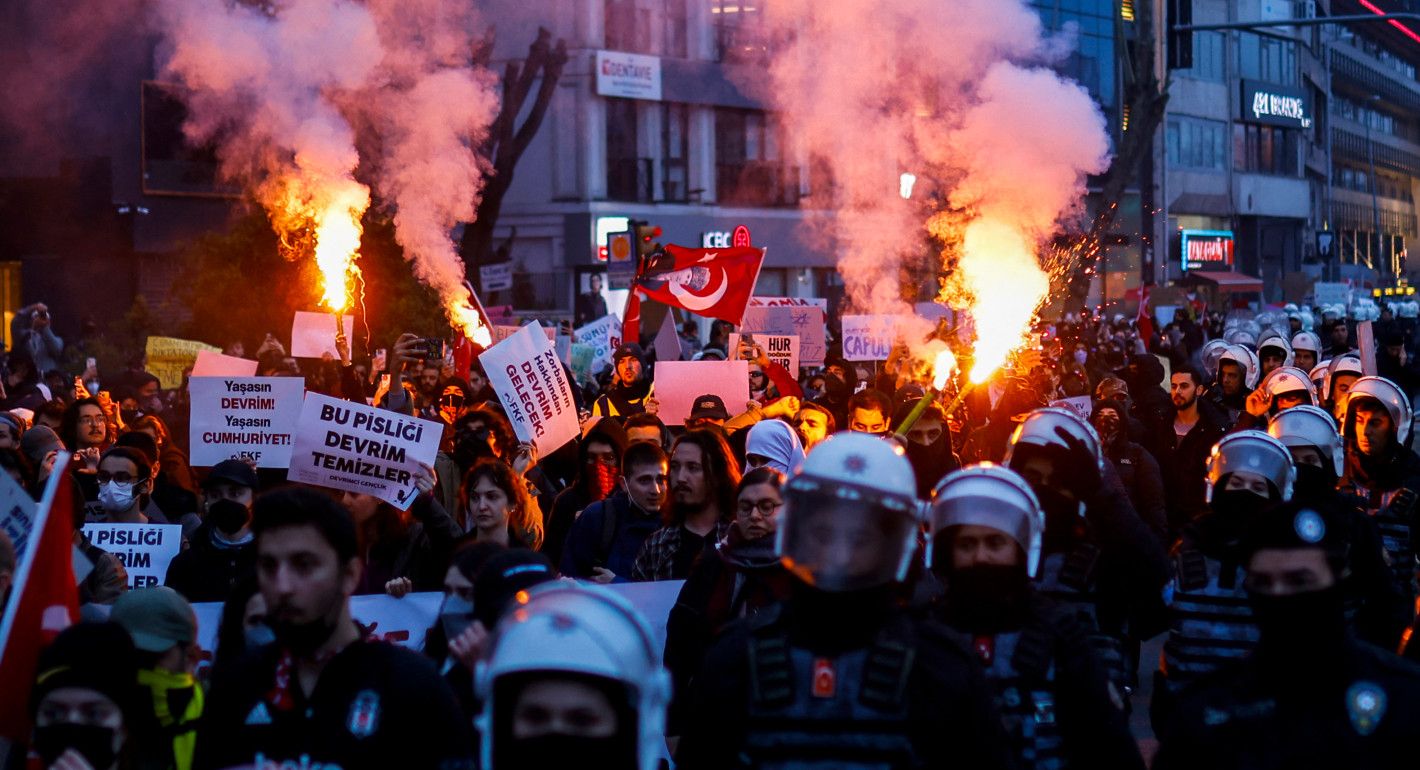
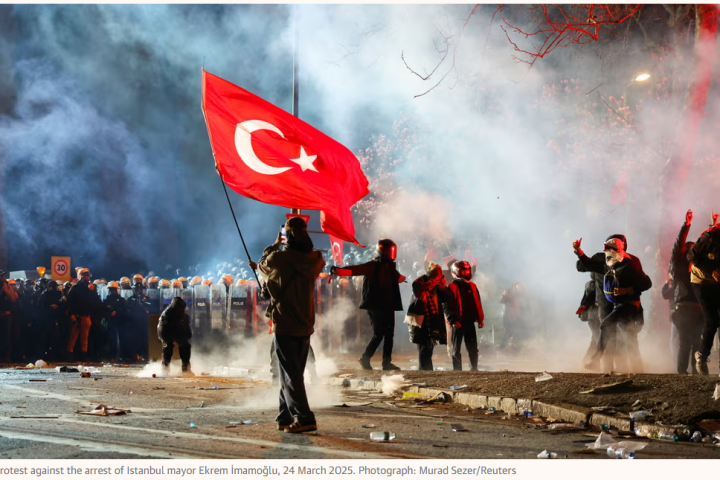
ISTANBUL — The streets of Istanbul, Ankara, and Izmir have become battlegrounds for Turkey’s soul. For nearly three months, tens of thousands of protesters have defied government bans, chanting “people, rights, justice” in response to the arrest of Ekrem İmamoğlu, the charismatic mayor of Istanbul and the opposition’s leading presidential candidate. The detention of İmamoğlu, alongside over 1,000 demonstrators and dozens of journalists, has thrust Turkey to the edge of a precipice, with its fragile democracy at risk of collapsing into outright authoritarianism under President Recep Tayyip Erdoğan.
Since İmamoğlu’s arrest on March 19, 2025, on what critics call trumped-up corruption charges, Turkey has been gripped by its largest anti-government protests in over a decade. The demonstrations, which began in Istanbul’s Taksim Square and spread nationwide, have united students, workers, and opposition supporters in a rare display of solidarity. “This isn’t just about one man,” said Ayşe, a 22-year-old university student in Ankara, who declined to give her full name for fear of arrest. “It’s about whether we’ll have a voice or be silenced forever.”
Turkey’s slide toward autocracy is not new. For years, Erdoğan and his Justice and Development Party (AKP) have chipped away at democratic institutions, turning what was once a flawed democracy into what political scientists call a “competitive authoritarian” regime. Elections are held, but the playing field is tilted: opposition leaders face legal harassment, independent media are muzzled, and state institutions are packed with loyalists. The 2016 coup attempt gave Erdoğan a pretext to purge over 4,000 judges, 9,000 police officers, and nearly half of Turkey’s top generals, cementing his control over the judiciary, police, and military.
But İmamoğlu’s arrest marks a dangerous escalation. As the opposition Republican People’s Party (CHP) candidate, he posed a real threat to Erdoğan, consistently outpolling him ahead of the 2028 presidential election. By jailing his main rival, Erdoğan has crossed a line that even he had avoided until now. “This is the moment Turkey could tip into full autocracy,” said Steven Levitsky, a Harvard professor and co-author of How Democracies Die. “When a regime starts arresting viable opposition candidates, it’s no longer just tilting the field—it’s burning it down.”
Erdoğan’s gamble is bolstered by two powerful advantages. First, he wields near-total control over Turkey’s state apparatus. The courts, staffed with AKP appointees, have upheld politically motivated convictions, while police have cracked down on protesters with tear gas and mass arrests. Social media platform X, a key outlet for dissent, has been forced to restrict over 700 accounts, including those of independent media, under government pressure.
Second, the international community has been strikingly silent. Turkey’s geopolitical leverage—as a NATO member, a host to over 3 million Syrian refugees, and a potential mediator in Ukraine—has muted Western criticism. The European Union, despite calling İmamoğlu’s arrest “deeply concerning,” has stopped short of sanctions, wary of jeopardling tensions with Ankara. The United States, under President Donald Trump’s second administration, has been even less vocal. Just days after the arrest, Trump’s special envoy described a call with Erdoğan as “great,” while Secretary of State Marco Rubio made only passing mention of “concerns” about the crackdown.
Yet, amid the repression, there is a flicker of hope. The protests, unlike the 2013 Gezi Park demonstrations, have a unifying figure in İmamoğlu, whose defiance from behind bars has inspired a “protest cascade” that shows no signs of abating. From his cell in Silivri prison, İmamoğlu has called on “honorable” judges and prosecutors to uphold justice, urging them to resist regime pressure. The CHP, which controls six of Turkey’s seven largest cities, has vowed to keep the movement alive, with party leader Özgür Özel framing the 2028 election as a “referendum on autocracy versus democracy.”
The protests have also sparked rare cracks in Erdoğan’s coalition. Last week, a small group of AKP lawmakers anonymously expressed unease over the arrests, according to Turkish media reports, though they stopped short of breaking ranks. Meanwhile, the European Parliament’s Türkiye rapporteur, Nacho Sánchez Amor, visited İmamoğlu in prison on May 30, signaling Europe’s tentative support for democratic values.
For many Turks, the stakes could not be higher. Turkey’s democratic tradition, rooted in its first multiparty elections in 1946, has long been a point of national pride, encapsulated in the concept of milli irade, or national will. Erdoğan himself rose to power by invoking this ideal after his own imprisonment in 1999. Now, his crackdown risks turning him into the very autocrat he once railed against, while İmamoğlu’s plight could make him a martyr for a new generation.
The global implications are profound. A fully authoritarian Turkey could destabilize the region, particularly as Syria struggles to emerge from dictatorship and Europe grapples with rising autocracy and beyond. “If Turkey falls, it’s another sign that democracy is in retreat worldwide,” said Gürkan Özturan, a Turkish activist.
As summer approaches, the protests show no sign of fading, but neither does Erdoğan’s resolve. The world’s democracies face a choice: speak out and risk alienating a key ally, or remain silent and watch Turkey’s democracy slip away. For now, the Turkish people are voting with their feet, defying bans and risking arrest to demand a future where their voices are heard. Whether their courage will be enough to halt Turkey’s slide remains an open question—one that will shape not just their country, but the global struggle for democracy.