 News Desk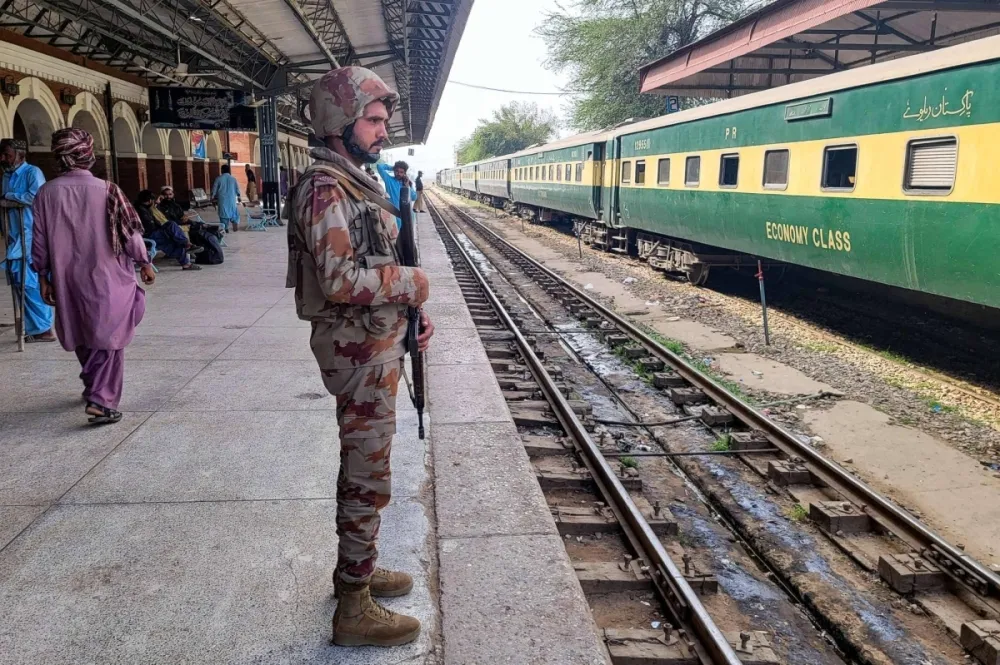
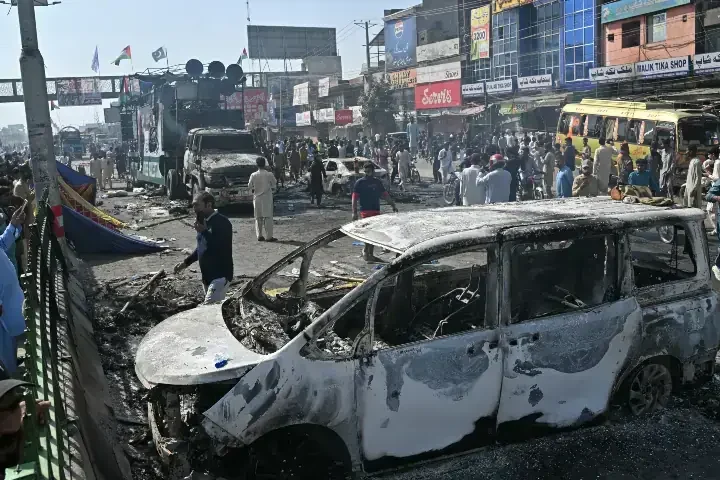
ISLAMABAD — Pakistan’s grip on its rugged western frontier has always been tenuous at best. Last week, that fragile hold unraveled further when Baloch separatists hijacked the Jaffar Express, a grim spectacle that left four soldiers dead in the effort to reclaim it and 21 hostages slaughtered by the militants — some of whom might have once worn the same uniform as their victims. The attack laid bare a stark reality: Islamabad’s authority in its borderlands is eroding, and fast.
Balochistan, a vast and sparsely populated province, has simmered with resentment toward the central government for decades. The bitterness has only deepened as Pakistan cozied up to Chinese firms, handing them the keys to Gwadar port and the region’s mineral wealth. The Baloch Liberation Army, which claimed the train assault, has capitalized on this discontent, its violence surging in recent years. Separatist killings jumped to over 500 in 2024, a sharp rise from 116 the year before — a bloody testament to Pakistan’s failure to address the grievances fueling this rebellion.
The military, not Prime Minister Shehbaz Sharif’s civilian administration, calls the shots on security matters. It wasted no time pointing fingers at the Afghan Taliban, accusing Kabul of letting the BLA operate from its territory.
Ties between the neighbors, never warm, have hit another icy low. Pakistan’s generals once smirked at the Afghan Taliban’s triumph over the United States, but that smugness has evaporated. The Taliban’s victory next door has only emboldened kindred spirits like the Pakistani Taliban, who killed 558 people last year — nearly double their toll from 2023.
For Sharif, this spiraling chaos is a nightmare. He’s desperate to steer Pakistan out of its economic tailspin, but the fires in Balochistan and beyond keep dragging his focus away. These aren’t problems you can bomb into submission; they demand political finesse, something Pakistan’s leadership — civilian and military alike — seems incapable of mustering.
Yet, amid the carnage, there’s a bizarre disconnect. While terror ravages the country’s fringes, the economic headlines from its urban core gleam with promise. Inflation has plummeted to 1.5% from a crippling 40% two years ago. Karachi’s stock market delivered an 84% return in 2024, with investors eyeing another 40% this year. Foreign cash is trickling back into government debt, and Moody’s just upgraded its outlook on Pakistan’s banks to positive — a surreal backdrop as soldiers mopped up blood in Balochistan.
Sharif’s team deserves some credit here. They’ve clawed in revenue through privatization and new taxes, keeping the IMF’s $7 billion lifeline alive. China, too, has tossed a $2 billion loan rollover into the pot. Solar power is booming — Pakistan snapped up enough panels last year to boost its electricity capacity by a third. But these wins feel hollow when the ground beneath them is so shaky.
The prime minister’s economic tightrope act hasn’t won him many friends. Imran Khan, the jailed ex-leader, tried to sabotage it by urging his overseas supporters to choke off remittances — the foreign cash Pakistan needs to keep its lights on.
That stunt flopped, with remittances surging 29.3% in 2024, but Khan’s rabid base could still grind the country to a halt on his say-so. Meanwhile, the Pakistani Taliban is targeting military-linked businesses, a swipe at the economic backbone itself given the army’s sprawling commercial tentacles.
Pakistan’s fledgling recovery could collapse overnight if this violence creeps from the lawless west into its cities, as it has before.
The deal propping up the status quo is straightforward: Sharif fixes the books, and the military keeps the peace. It’s a shaky pact, and it’s cracking. A local paper nailed it: Balochistan’s crisis is political at its core, not just a security headache. The same goes for the mess with Kabul, the dance with Beijing, and the fury of Khan’s loyalists.
The generals need to wake up. They can’t keep treating every problem as a nail for their hammer. Their credibility is bleeding out with every failure to contain the mayhem, and brute force alone won’t stem the tide. Sharif, for his part, has to step up beyond playing budget wizard. He’s steadied the economy — no small feat — but Pakistan needs a leader, not just a bean counter. Until both sides rethink their roles, the country will keep lurching from one crisis to the next, its promise forever out of reach.